Figma, After Effects, Illustrator
Streamline App
Project Overview
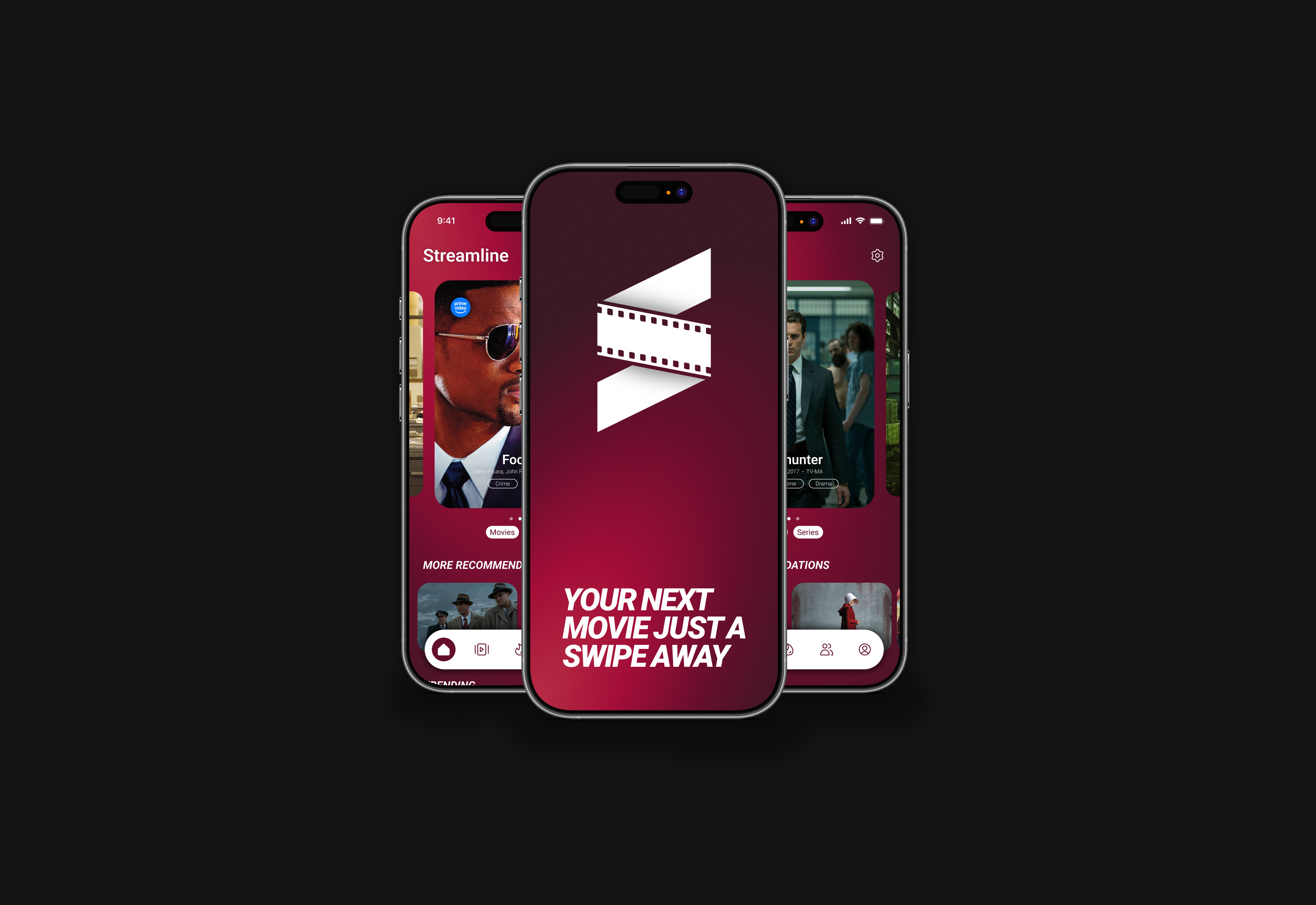
Streamline is a mobile app designed to help users discover movies and TV shows more easily across multiple streaming platforms. Inspired by Tinder-style interactions, Streamline uses a swipe-based interface, AI-driven recommendations, and social preference matching to remove decision fatigue—especially when choosing what to watch with friends.
This project was developed collaboratively with a partner in the Ringling College Business of Art and Design program, Amanda Godines, over the course of our Intro to UI/UX class, taking the app from early ideation to a fully designed and prototyped experience.
The Problem
With the growing number of streaming services, users are often overwhelmed by choices when trying to decide what to watch. Instead of enjoying content, people—especially young adults—spend excessive time scrolling through multiple platforms without finding something that feels right. This problem becomes even more frustrating when watching with friends, where differing tastes make it difficult to agree on a movie or show.
Streamline addresses this by providing a faster, more engaging way to discover movies and TV shows across streaming platforms. By using a swipe-based interface, personalized recommendations, and social preference matching, the app reduces decision fatigue and helps users quickly find content that fits individual tastes and group preferences.
Ideation, Research & User Personas
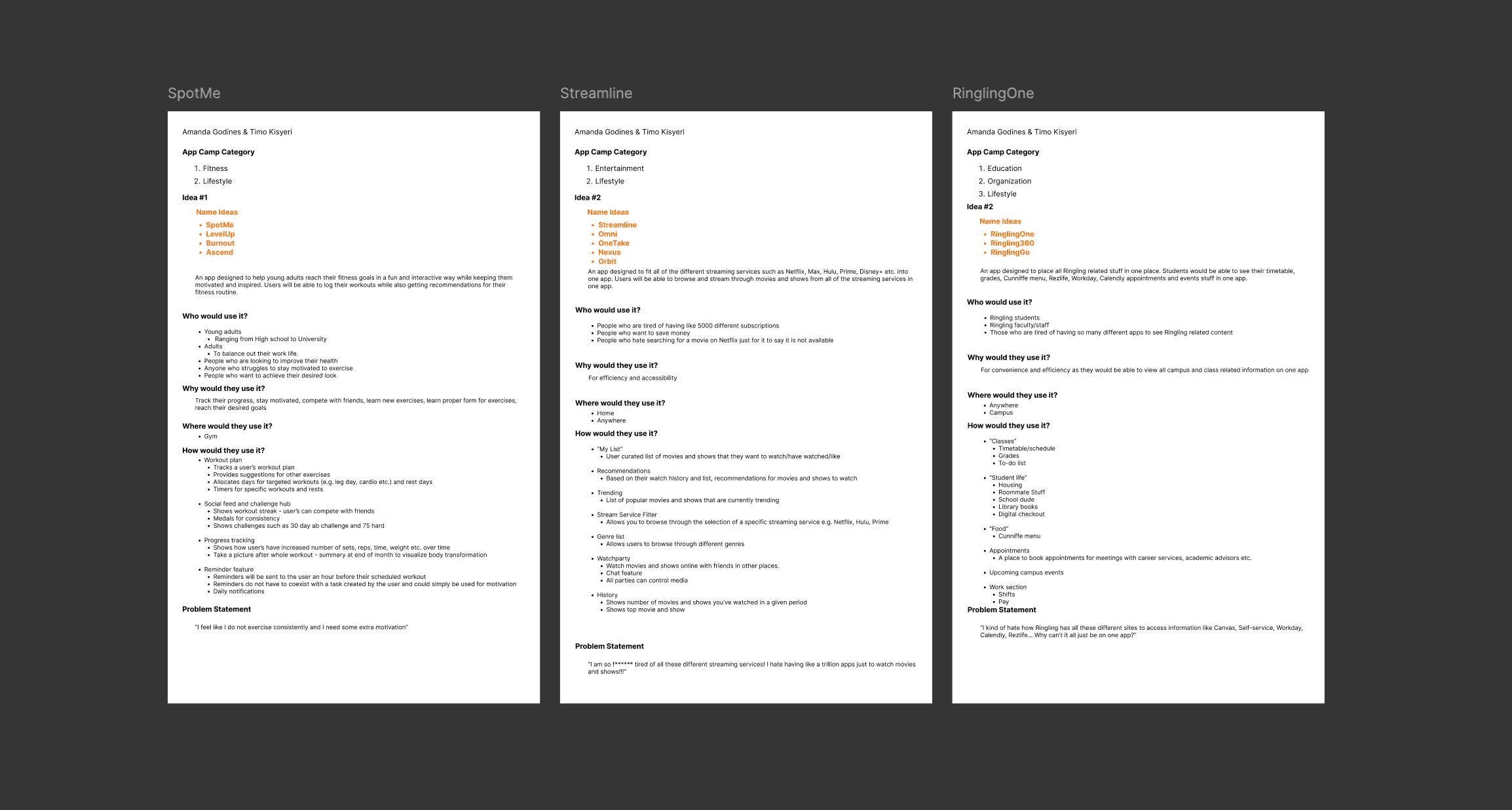
We began the project with open-ended ideation, exploring multiple app concepts before identifying decision fatigue caused by fragmented streaming platforms as a key pain point. Using the Kipling Method, we defined the scope of the problem and better understood the users and contexts in which the app would be used.
This research helped us focus on young adults who frequently watch movies and shows both alone and with friends. We developed user personas representing different viewing behaviors, which guided our design decisions and ensured Streamline remained centered on real user needs rather than assumptions.
Features, Strategy, User Flows & Paper Prototypes
Based on our research and personas, we defined Streamline’s core features with a focus on simplicity, engagement, and social interaction. These included a swipe-based discovery system, personalized recommendations, and social matching with friends.
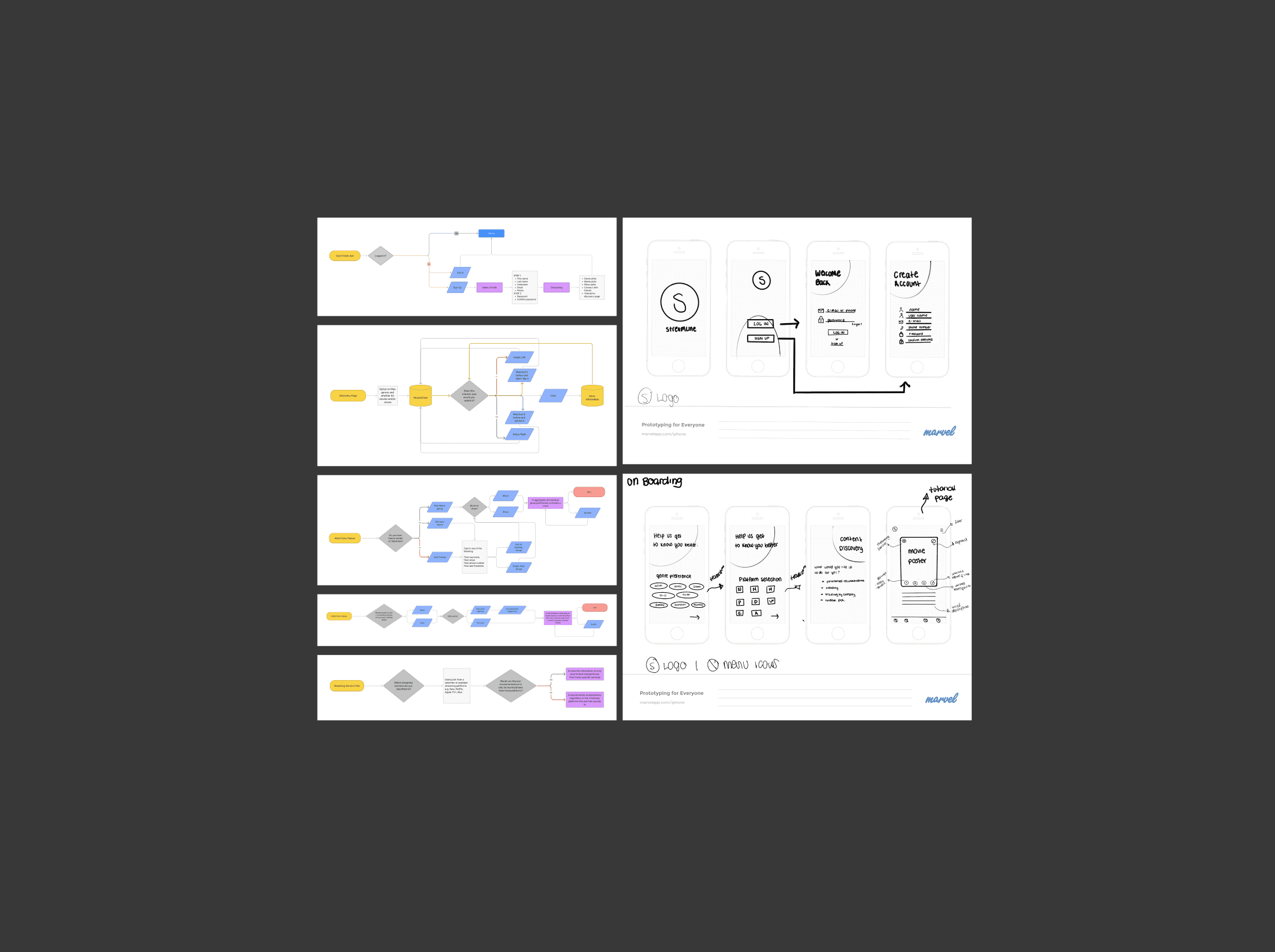
To ensure these features worked cohesively, we created detailed user flows for key interactions such as onboarding, content discovery, and group matching. These flows were translated into low-fidelity paper prototypes, allowing us to quickly test layout, navigation, and interaction patterns before moving into digital wireframes.
Wireframes, Design & Prototyping
After validating core interactions through paper prototypes, we moved into digital wireframes to refine layout, hierarchy, and navigation. This stage focused on creating a clear, intuitive structure that supported fast discovery while keeping the interface minimal and easy to use.
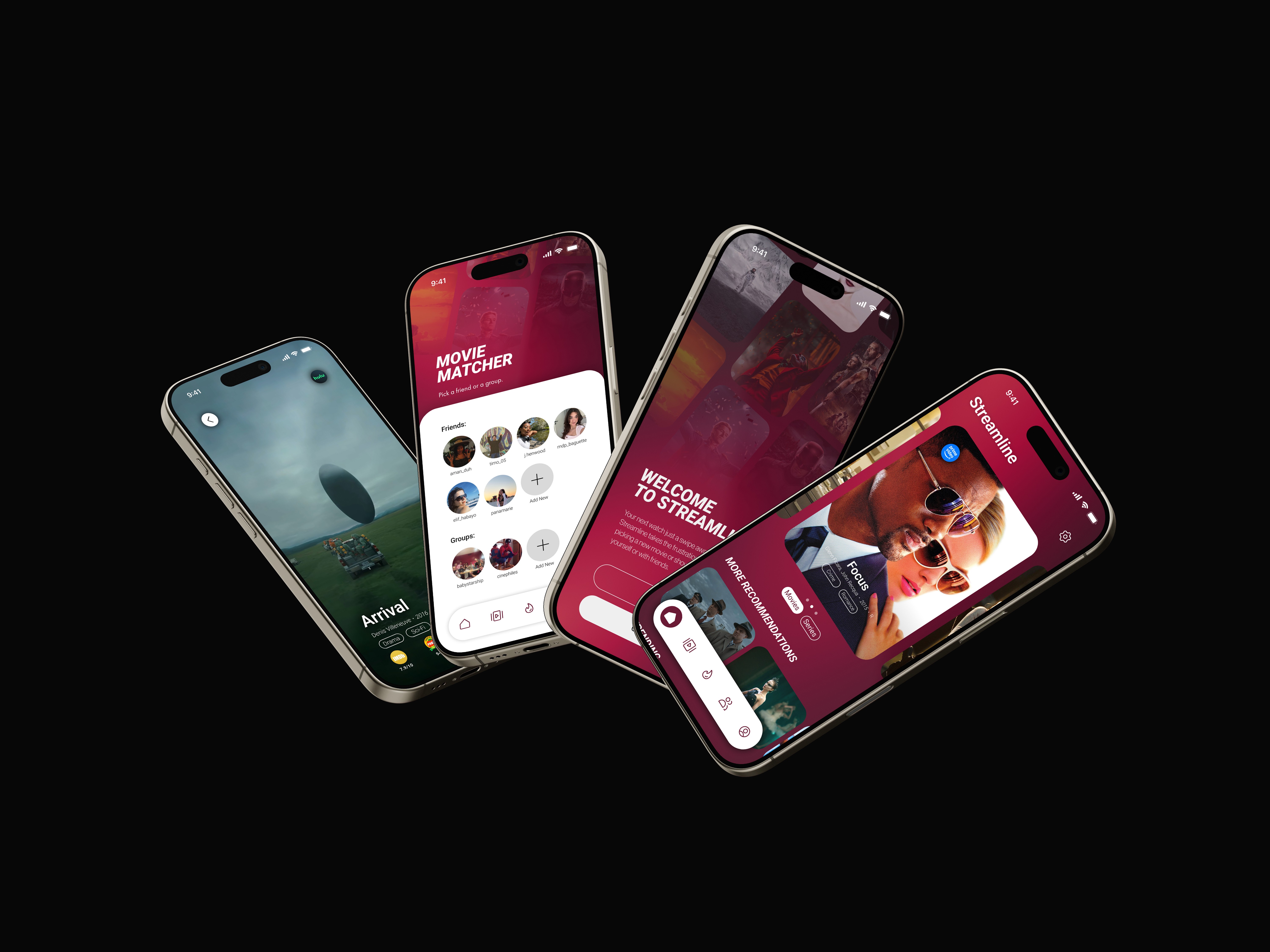
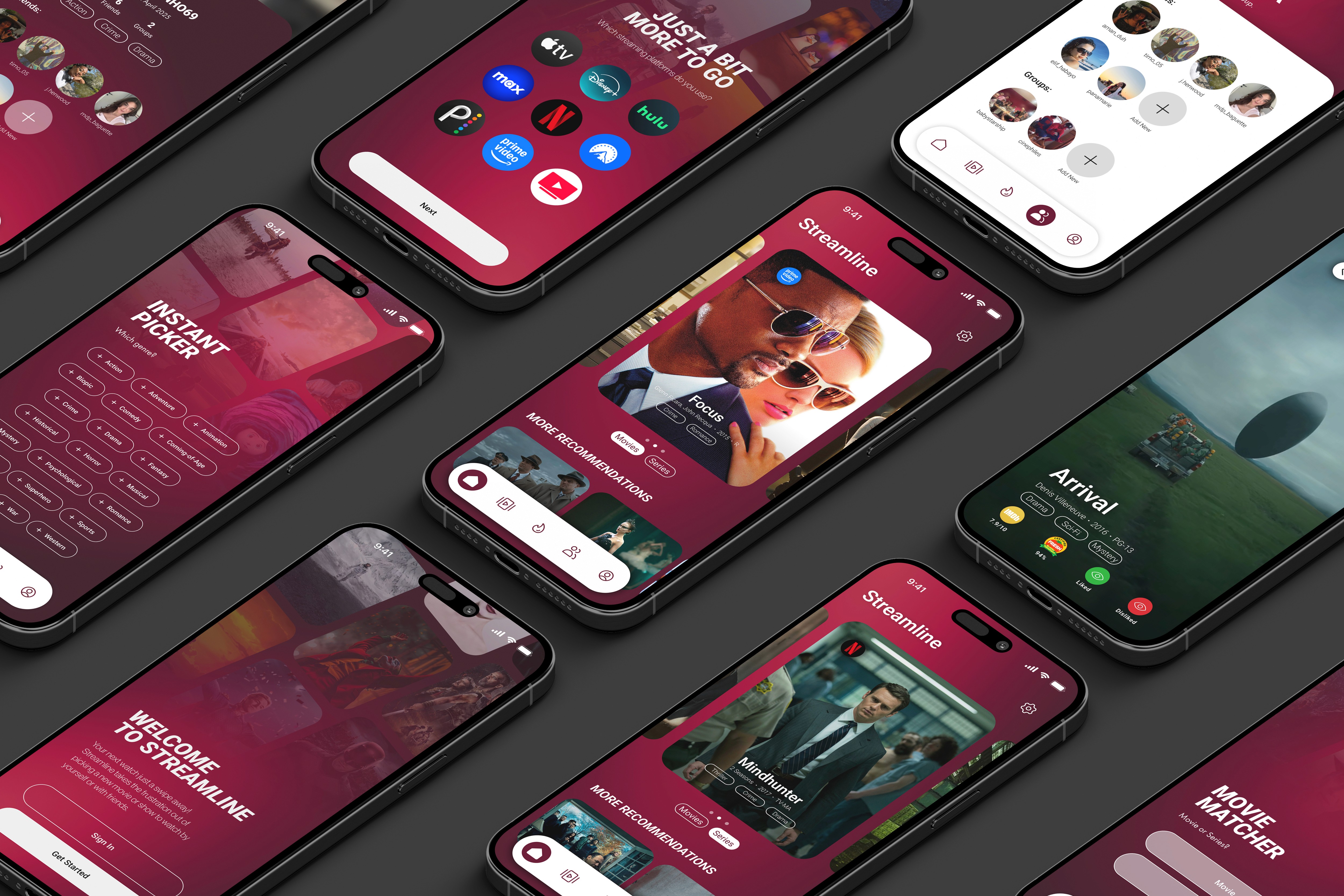
Once the wireframes were finalized, we developed Streamline’s visual design and interactive prototype. The app features a gradient-based interface, rounded rectangular cards, and clean filled icons to create a modern, immersive experience. Prototyping allowed us to test key flows—such as navigation, swiping, and social interactions—ensuring the experience felt smooth, responsive, and cohesive.
Feature Highlight: Swipe-Based Discovery
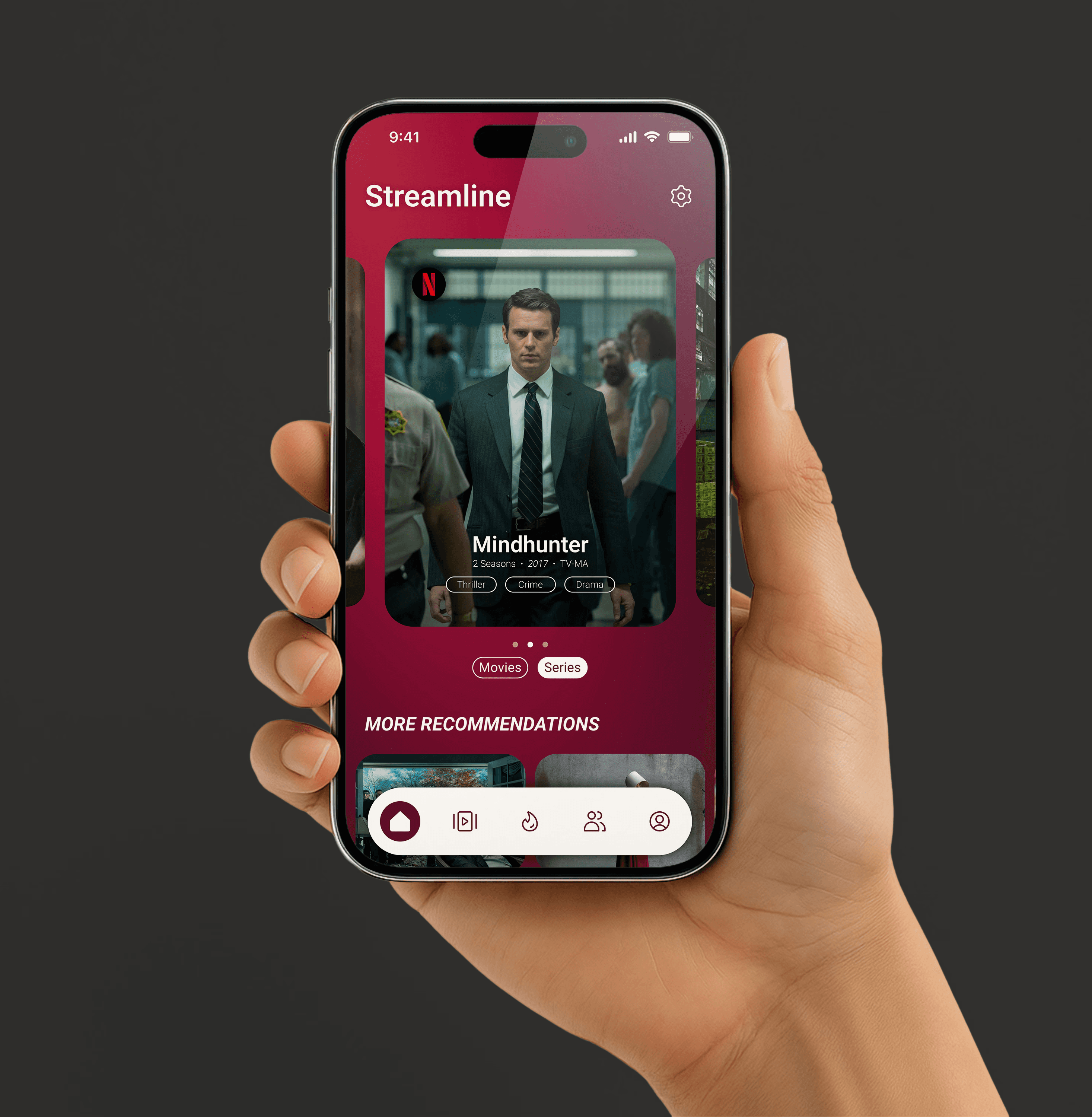
The swipe-based discovery page is the core feature of Streamline. Inspired by Tinder-style interactions, users swipe right to like and left to skip movies and TV shows, eliminating endless scrolling across multiple platforms. Each card presents key information at a glance—such as the title, ratings, and streaming availability—with the option to swipe up for more details like cast and synopsis.
As users interact, Streamline learns their preferences and continuously refines recommendations. Liked content can also be aggregated with friends’ preferences, making it easier to find movies and shows that work for everyone.
Reflection
Streamline emphasized the value of clear problem definition, iteration, and collaboration in the UI/UX process. Through research, prototyping, and testing, we learned how small interaction and hierarchy decisions can greatly impact usability. This project strengthened our understanding of designing focused, user-centered experiences from concept to prototype.
To interact and explore the various features of Streamline including the onboarding, swipe-based discovery, movie-matcher, instant pick feature and more which weren't featured in this case study, click the button below.